Infectious Disease Surveillance Across Africa Explained
- July 12, 2022· Article de Beth Smith
- Medicine , French translation services
Africa carries a large share of the world's infectious disease burden, including malaria, tuberculosis, HIV, cholera and recurring outbreaks of Ebola, measles and mpox. It also hosts some of the most experienced outbreak responders on the planet. Surveillance, the steady collection and analysis of health data, is the backbone of their work. Without it, outbreaks are discovered late, and treatment and prevention are guesswork.
This article explains how surveillance works, where the challenges lie and what is improving.
What Surveillance Means
Disease surveillance is the systematic collection, analysis and interpretation of health information, used to guide public health action. It answers practical questions. How many cases are there? Where are they? Who is affected? Is the number rising? A good surveillance system turns scattered reports into early warning.
From Clinic to Capital
Most reports start at a health centre or hospital where clinicians record cases of notifiable diseases. District health teams collect and verify them, then send summaries to national authorities. Laboratories confirm diagnoses and sequence pathogens, and national institutes of public health analyse trends and advise ministries.
At the continental level, the African Union's disease control body coordinates data sharing and response between countries. The World Health Organization Regional Office for Africa supports countries with technical guidance, training and outbreak alerts.
Types of Surveillance
Passive surveillance relies on facilities reporting cases they see. Active surveillance involves health workers searching for cases, for example during a suspected outbreak. Sentinel sites monitor selected diseases at chosen locations. Event based surveillance picks up unusual signals from rumours, media and community reports, which matters most for catching new threats early.
Laboratories and Genomics
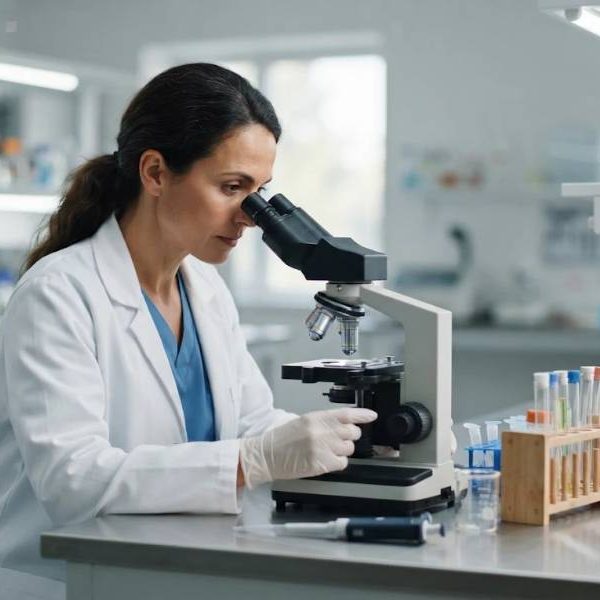
Laboratory confirmation separates one disease from another when symptoms look alike. Over the past decade, genomic sequencing has expanded across the continent, allowing scientists to track variants, trace transmission chains and design better vaccines. Regional laboratory networks share equipment, training and samples across borders.
Sequencing also reminds scientists how strange their subject is. For readers who want the bigger picture, this explainer on what viruses really are looks at why they blur the line between living and non-living, why they do not fit neatly into the tree of life, how their genomes rewrite evolutionary history and why their classification keeps changing.
Community Health Workers
Community health workers are often the first to notice unusual illness. They visit homes, track pregnancies and report deaths. Training, supervision and reliable communication tools, such as mobile phones with simple reporting apps, allow them to send alerts in real time. Their local knowledge and trust make them indispensable.
Digital Tools
Electronic reporting platforms have replaced paper forms in many countries. Dashboards give officials a view of cases by region and week. Mobile applications support data collection in remote areas, and geographic mapping tools highlight clusters. Success depends on reliable electricity, internet access and staff training.
Languages in Public Health Communication
Africa has more than a thousand languages, and official languages include French, English, Portuguese, Arabic and others. Surveillance forms, guidelines and alerts move between ministries and international partners in different languages. Francophone countries such as Senegal, Cote d'Ivoire, Mali and the Democratic Republic of the Congo produce important reports in French that must be shared with English speaking partners. Specialised French translation services help research teams and agencies exchange accurate technical documents.
Translating Scientific Reports
Medical terms must be translated precisely, since errors can change a case definition or a dosage. Researchers who read French language studies can find tips in this article on French to English translation, which discusses typical pitfalls with terminology and structure.
Vaccination and Response
Surveillance data guide vaccination campaigns, outbreak response and resource allocation. When cholera cases rise in a district, teams deliver clean water, oral vaccines and treatment supplies. When measles clusters appear, health workers organise catch up immunisation. Fast data leads to fast action, and the interval between detection and response often decides how large an outbreak becomes.
Zoonotic Diseases and One Health
Many new infections pass from animals to people. The One Health approach brings together human, animal and environmental health experts to monitor diseases at the point where they meet, such as markets, farms and forests. Joint surveillance can reveal threats months earlier than clinics alone.
Training the Next Generation
Field epidemiology programmes train doctors, nurses and laboratory scientists to investigate outbreaks, analyse data and communicate with communities. Graduates now lead national response teams, and their networks across countries make cooperation faster.
Challenges Remaining
Gaps persist. Some regions have few laboratories, transport for samples is slow and health workers are overstretched. Funding often depends on specific diseases, which leaves other threats less monitored. Political instability and conflict also make surveillance difficult, and data privacy rules are still developing in many countries.
What Is Improving
Networks of laboratories are growing, regional training programmes have strengthened field epidemiology and more countries now publish regular bulletins. Lessons from outbreaks, including Ebola in West Africa and the COVID-19 pandemic, led to investment in faster detection and local manufacturing of tests and vaccines.
Data Ethics and Privacy
Health data is sensitive. Systems must protect patient identities, use data only for public health purposes and explain clearly how information is shared. Trust from communities depends on respect for these principles.
Why It Matters Everywhere
Infectious diseases do not respect borders. Strong surveillance in one country protects others, and shared data helps scientists everywhere. Supporting these systems, through funding, training and open collaboration, is both a humanitarian duty and a matter of global health security.